Naqsh-e Jahan Square, Isfahan

Isfahan
Naqsh-e Jahan Square, Isfahan
The Enduring Legacy of Naqsh-e Jahan Square, Isfahan
A Grand Vision Realized by Shah Abbas I
UNESCO World Heritage Status: A Global Treasure

Naqsh-e Jahan Square, Isfahan

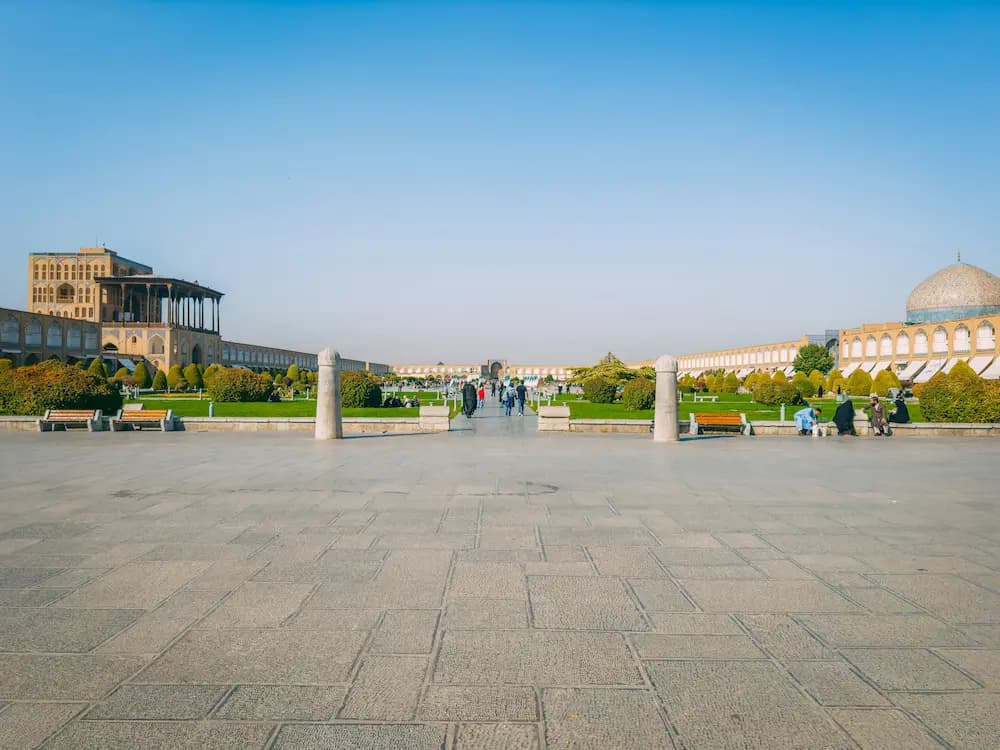
Step into the heart of Isfahan and discover one of Iran's most breathtaking historical attractions: Naqsh-e Jahan Square. Officially known as Meidan Emam, this UNESCO World Heritage site is a magnificent testament to Safavid-era grandeur, serving as the political, religious, economic, and social nexus of 17th-century Isfahan. Its vast expanse is bordered by architectural masterpieces that together tell the story of an empire and its enduring cultural legacy, making a visit to Naqsh-e Jahan Square, Isfahan an unforgettable journey through Persian history.

The Enduring Legacy of Naqsh-e Jahan Square, Isfahan

The Enduring Legacy of Naqsh-e Jahan Square, Isfahan

In the early 17th century, Shah Abbas I, the Great, embarked on an ambitious urban transformation, moving the Safavid capital to Isfahan. At the heart of this new metropolis, he envisioned and brought to life the majestic Naqsh-e Jahan Square, a monumental rectangular plaza designed by the revered architect Sheikh Bahaei. This colossal space, approximately 560 meters long and 160 meters wide, was conceived as the vibrant nerve center of the Safavid empire, seamlessly integrating political, religious, economic, and social life. Originally, a smaller square existed in the Timurid era, but its current splendor is entirely a product of Shah Abbas's grand design, turning Isfahan into 'Half the World.' Historically, Naqsh-e Jahan Square was the stage for official ceremonies, thrilling polo matches (with stone goalposts still standing), military parades, and grand celebrations, truly embodying a 'city within a city' that met all the capital's needs. The very essence of Isfahan’s identity is intertwined with Naqsh-e Jahan Square, Isfahan.

A Grand Vision Realized by Shah Abbas I

A Grand Vision Realized by Shah Abbas I
In the early 17th century, Shah Abbas I, the Great, initiated an ambitious urban transformation, moving the Safavid capital to Isfahan. He then commissioned the creation of Naqsh-e Jahan Square, a monumental rectangular plaza designed by Sheikh Bahaei, to serve as the political, religious, economic, and social heart of the new capital. This vast space became a symbol of Safavid power and sophistication.

UNESCO World Heritage Status: A Global Treasure

UNESCO World Heritage Status: A Global Treasure
The profound historical and architectural significance of Naqsh-e Jahan Square led to its inscription as a UNESCO World Heritage Site in 1979. This recognition highlights the square's unparalleled value as a masterpiece of human creative genius, representing an outstanding achievement in urban design and architecture. UNESCO noted the square's demonstration of an extraordinary exchange of human values, profoundly influencing urban planning throughout Asia. Understanding Naqsh-e Jahan Square is to grasp a fundamental piece of Iran's rich cultural heritage.

Iconic Architecture: Pillars of Safavid Power at Naqsh-e Jahan Square

Iconic Architecture: Pillars of Safavid Power at Naqsh-e Jahan Square

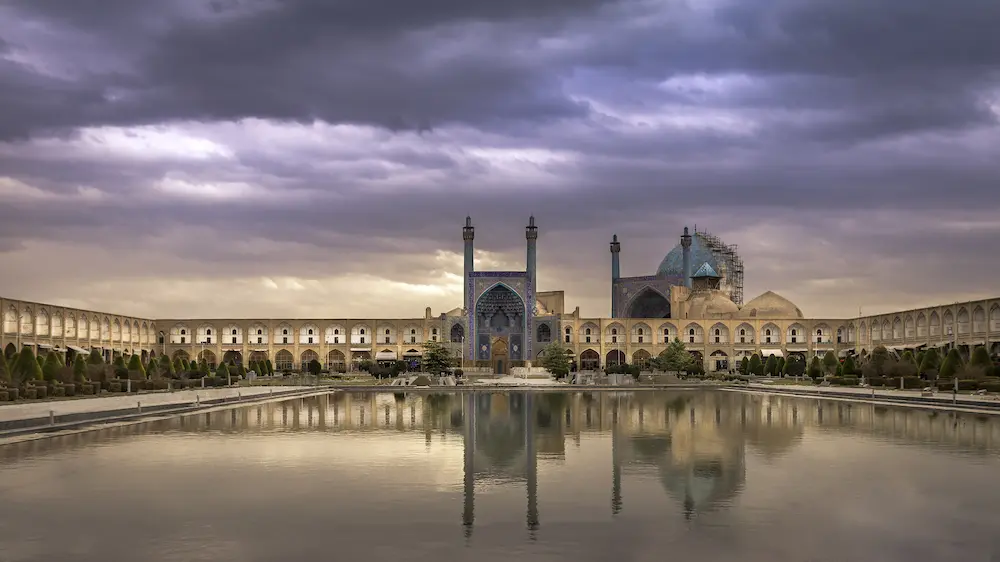
Four majestic buildings enclose Naqsh-e Jahan Square, each a masterpiece of Iranian-Islamic architecture and a symbol of Safavid governance: the Imam Mosque (religion), Sheikh Lotfollah Mosque (royal religion), Ali Qapu Palace (politics), and Qeysarieh Gate and the Grand Bazaar (commerce). These structures exemplify the Safavid urban planning concept of 'comprehensiveness,' all unified by the central square. A visit to Naqsh-e Jahan Square offers a journey through architectural brilliance.

Imam Mosque (Shah Mosque): A Public Proclamation of Faith

Dominating the southern side of Naqsh-e Jahan Square stands the awe-inspiring Imam Mosque, also known as the Shah Mosque or Jameh Abbasi Mosque. This colossal structure, begun in 1020 AH and taking over 18 years to complete, symbolized the official religion and its pivotal role in the Safavid government. Its genius lies in the 'pashneh-pich' or twisted axis: while the entrance aligns perfectly with the square, the main sanctuary and mihrab are rotated 90 degrees towards Mecca. This clever architectural solution, achieved with a grand vestibule, subtly guides visitors to the correct orientation. The mosque boasts magnificent seven-color and moarraq (mosaic) tilework, featuring vibrant blues, yellows, and white. Its double-shelled dome, soaring 52 meters high, and the remarkable acoustics beneath it – where a whisper at the center echoes throughout the sanctuary – are testaments to Safavid engineering brilliance within Naqsh-e Jahan Square.

Sheikh Lotfollah Mosque: An Exquisite Royal Chapel

On the eastern side of Naqsh-e Jahan Square, the Sheikh Lotfollah Mosque offers a contrasting yet equally mesmerizing architectural experience. Unlike the public Imam Mosque, this smaller, exquisitely decorated mosque served as a private chapel for Shah Abbas I and his court, named after the renowned theologian Sheikh Lotfollah Maysi. Notably, it lacks a minaret and a large courtyard, signifying its private function. Its global fame stems from its unique dome, which appears creamy or earthy in color but subtly shifts hues throughout the day with the changing sunlight. Inside, the 'Peacock under the Dome' effect is a marvel: at certain times, light from the apex creates the illusion of a peacock with its tail spread on the sanctuary floor. The mihrab, adorned with inscriptions by Ali Reza Abbasi and stunning mosaic tiles, is considered one of the most beautiful in the Islamic world, further elevating the stature of Naqsh-e Jahan Square.

Ali Qapu Palace: The Emperor's Viewing Platform

The western side of Naqsh-e Jahan Square is graced by the Ali Qapu Palace, meaning 'Sublime Gate.' This multi-story palace served as the seat of government and the grand entrance to the Safavid royal residential complex. Originally simpler, it was expanded and beautified over successive reigns, becoming a powerful symbol of political authority and the Shah’s direct connection to his people. Its most iconic feature is the lofty columned iwan (balcony) on the upper floors, from which the Shah and his courtiers would observe polo matches, military parades, and public festivities unfolding in Naqsh-e Jahan Square. This iwan, supported by 18 wooden columns and featuring a central copper pool, was a hub for court ceremonies. Ascend to the sixth floor to discover the extraordinary Music Room (Sound Room), where intricate, instrument-shaped cut-outs in the walls were ingeniously designed to absorb echoes and perfect acoustics, creating a peerless space for musical performances—a true feat of engineering at the heart of Naqsh-e Jahan Square.

Qeysarieh Gate: The Majestic Entrance to Commerce

Anchoring the northern side of Naqsh-e Jahan Square, the majestic Qeysarieh Gate serves as the principal entrance to the Grand Bazaar of Isfahan, symbolizing the city’s powerful commercial and economic prowess during the Safavid era. Its impressive height and rich decorations underscore the bazaar's importance. Historically, a Naqqareh Khaneh (drum-house) atop the gate would announce the time and special occasions with music. The gate's most notable features are the remnants of mural paintings by the celebrated miniaturist Reza Abbasi, depicting scenes of Shah Abbas's battles and polo games, though much has faded with time. The exquisite tilework, showcasing Isfahanian and Khatayi designs, transforms this entryway into a work of art, leading seamlessly into the bustling arteries of the Grand Bazaar, an integral part of the Naqsh-e Jahan Square experience.

The Vibrant Heartbeat: Isfahan's Historic Bazaars surrounding Naqsh-e Jahan Square

The bustling bazaars surrounding Naqsh-e Jahan Square were, and remain, the economic artery of Isfahan. Connected by the magnificent Qeysarieh Gate, this sprawling marketplace offers an immersive experience into the city's rich commercial and cultural heritage. It was not merely a place for trade but a vibrant hub for social interaction and the exchange of ideas, truly complementing the grandeur of Naqsh-e Jahan Square, Isfahan.

The Grand Qeysarieh Bazaar: A Labyrinth of Riches

Beyond the grandeur of the monuments, the bazaars surrounding Naqsh-e Jahan Square pulse with life, serving as Isfahan’s enduring economic artery. The Grand Qeysarieh Bazaar, accessible through the eponymous gate, stretches for over two kilometers and was once a vital international trade hub on the legendary Silk Road. It was a conduit for local goods, fine textiles, and luxury commodities from as far as China, India, and Europe. The bazaar's ingenious architecture, with its domed ceilings and arched pathways, not only created a naturally cool environment for trade but also artfully filtered natural light into its depths. Navigating these vibrant passageways is an essential part of any visit to Naqsh-e Jahan Square, Isfahan.

Craftsmanship and Specialized Caravanserais

Within the labyrinthine corridors of the Grand Bazaar, each section historically catered to specific guilds. Today, it remains the prime destination for authentic Persian handicrafts, including intricate Khatamkari (inlaid work), precise Qalamzani (engraving on metal), vibrant Minakari (enameling), and beautifully printed Qalamkar textiles. The aroma of exotic spices, the clatter of coppersmiths' hammers in the Bazar-e Mesgarha (Coppersmiths’ Bazaar), and the vibrant displays engage all senses, offering a rich immersion into Iranian culture. The bazaar also houses Timcheh or Sara (Caravanserais), specialized sections for specific goods like carpets, gold, jewelry, and fine textiles. This integrated design showcases the sophisticated urban planning of the Safavid era, making the bazaar an inseparable and lively component of the Naqsh-e Jahan Square complex.

Beyond Naqsh-e Jahan Square: Nearby Isfahan Gems

While Naqsh-e Jahan Square is undoubtedly the crown jewel of Isfahan, the city abounds with other historical and cultural treasures just a short distance away. Exploring these nearby attractions offers a deeper understanding of Isfahan's historical tapestry and complements the experience of Naqsh-e Jahan Square, Isfahan, providing a comprehensive insight into this legendary city.

Chehel Sotoun and Hasht Behesht Palaces

Isfahan is often called 'Half the World,' and its riches extend well beyond Naqsh-e Jahan Square. Just a short walk away, along Standardari Street, lies the magnificent Chehel Sotoun Palace (Forty Columns Palace). This stunning pavilion and garden, built by Shah Abbas II, was designed for royal receptions and now serves as a museum, its exquisite murals depicting Iranian historical and legendary tales. A little further, near Chehel Sotoun, you’ll discover the enchanting Hasht Behesht Palace (Eight Heavens Palace), a splendid example of Safavid residential architecture renowned for its delicate decorations and serene garden. Both offer a beautiful contrast and complement to the grandeur of Naqsh-e Jahan Square, Isfahan.

Jameh Mosque of Isfahan and Jolfa Quarter

For those with more time, venture further to explore other UNESCO-listed sites and cultural enclaves. The Jameh Mosque of Isfahan, one of Iran's oldest and most significant religious structures, showcases over a thousand years of Islamic architectural evolution; it's accessible by taxi or metro from Naqsh-e Jahan Square. In the city's southern part, the historic Armenian Quarter of Jolfa and its centerpiece, Vank Cathedral, provide a fascinating insight into the cultural coexistence of the Safavid period, blending Iranian and European artistic influences. These sites offer a broader perspective on the historical tapestry that makes Isfahan, and especially Chehel Sotoun Palace, such a captivating destination.

Experience Naqsh-e Jahan Square: Things to Do

Explore the Architectural Masterpieces

Wander through the Imam Mosque, marvel at the Sheikh Lotfollah Mosque's dome, ascend Ali Qapu Palace for panoramic views, and admire the Qeysarieh Gate. Each building around Naqsh-e Jahan Square offers unique historical and artistic insights.

Shop for Authentic Persian Handicrafts

Dive into the bustling Grand Bazaar via Qeysarieh Gate. Discover exquisite Minakari (enameling), Khatamkari (inlaid work), Qalamzani (metal engraving), and vibrant Qalamkar textiles. Engage with artisans and find unique souvenirs from Naqsh-e Jahan Square.

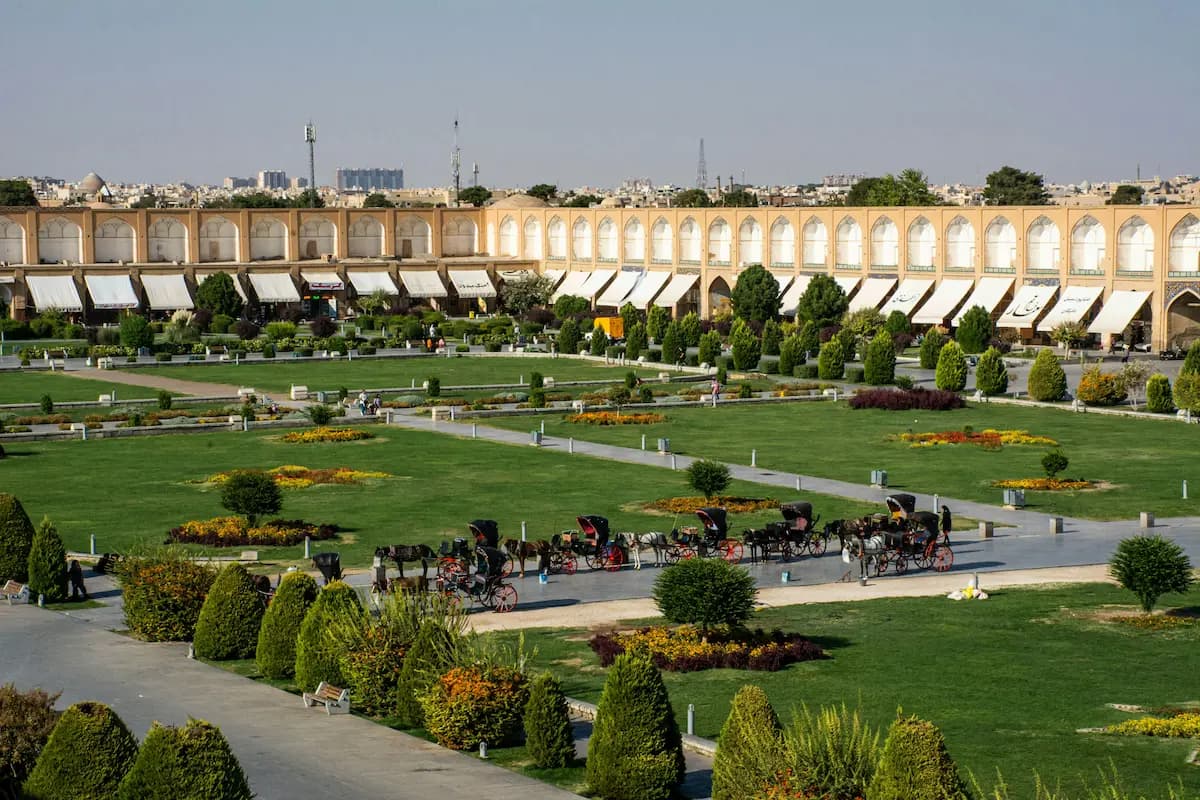
Enjoy a Horse-Drawn Carriage Ride

Experience Naqsh-e Jahan Square from a different perspective with a leisurely horse-drawn carriage ride. It's a charming way to soak in the atmosphere and admire the scale of the square and its surrounding monuments.

Savor Local Flavors and Teahouse Culture

Around Naqsh-e Jahan Square and within the bazaar, discover traditional teahouses and eateries. Sample local Isfahani dishes, enjoy a cup of Persian tea, and soak in the vibrant ambiance that has characterized this area for centuries.

Your Essential Naqsh-e Jahan Square Travel Guide

Best Time to Visit

Spring (March-May) and Autumn (September-November) offer the most pleasant weather. Early mornings or late afternoons are ideal to avoid crowds and harsh sunlight; the light is also perfect for photography. To witness the famous 'Peacock under the Dome' effect in Sheikh Lotfollah Mosque, aim for midday.

Getting There

Naqsh-e Jahan Square is centrally located in Isfahan. The closest metro station is Imam Hossein (Darvazeh Dolat), about a 15-20 minute walk away. Buses also serve the surrounding streets. Taxis and ride-sharing services are the most convenient, dropping you off on adjacent streets as vehicle access to the square itself is restricted. If staying in central Isfahan, walking is an excellent way to soak in the city's atmosphere.

Entrance Fee

SThe Naqsh-e Jahan Square itself is a public space with no entrance fee. However, individual buildings like Imam Mosque, Sheikh Lotfollah Mosque, and Ali Qapu Palace require separate tickets. Expect to pay approximately $5-7 USD per building for foreign tourists. Prices may vary, so check at the ticket booths upon arrival.

Visiting Hours

The Naqsh-e Jahan Square is open 24 hours. The main monuments (Imam Mosque, Sheikh Lotfollah Mosque, Ali Qapu Palace) generally operate in two shifts: 9:00 AM - 12:30 PM and 3:30 PM - 6:00 PM (Spring/Summer), closing half an hour earlier in Autumn/Winter. Mosques close during prayer times to non-Muslim visitors. Bazaars are typically open from morning until sunset, with some shops around the square staying open later.

Frequently Asked Questions

Author: Deytrips Team
Was this content helpful?

Ready to Discover Naqsh-e Jahan Square?

Let Deytrips craft your personalized journey to Isfahan and experience the splendor of Naqsh-e Jahan Square and Iran's rich heritage.

Plan Your Iran Adventure